
I tested this stuffed chicken recipe three times in two days. My kitchen smelled like a collision between a high-end French bistro and Thanksgiving dinner. But during round one, my stove was an absolute crime scene of scorched dairy fat. I cut into my first test breast only to discover that every drop of cheese had escaped onto the cast iron skillet, leaving me with a hollow, dry chicken breast sitting in a puddle of burnt grease.
Let me be completely candid with you. Most stuffed chicken breast recipes on food blogs are an exercise in frustration. They tell you to shove soft cheese into a chicken breast, pop it in the oven, and cross your fingers.
What happens? The chicken takes 25 minutes to cook through. In that time, the cheese reaches its boiling point, breaks through the pocket, and floods the pan. You end up with rubbery meat, zero cheese inside, and a burnt mess to scrub off your cookware.
We are not doing that today.
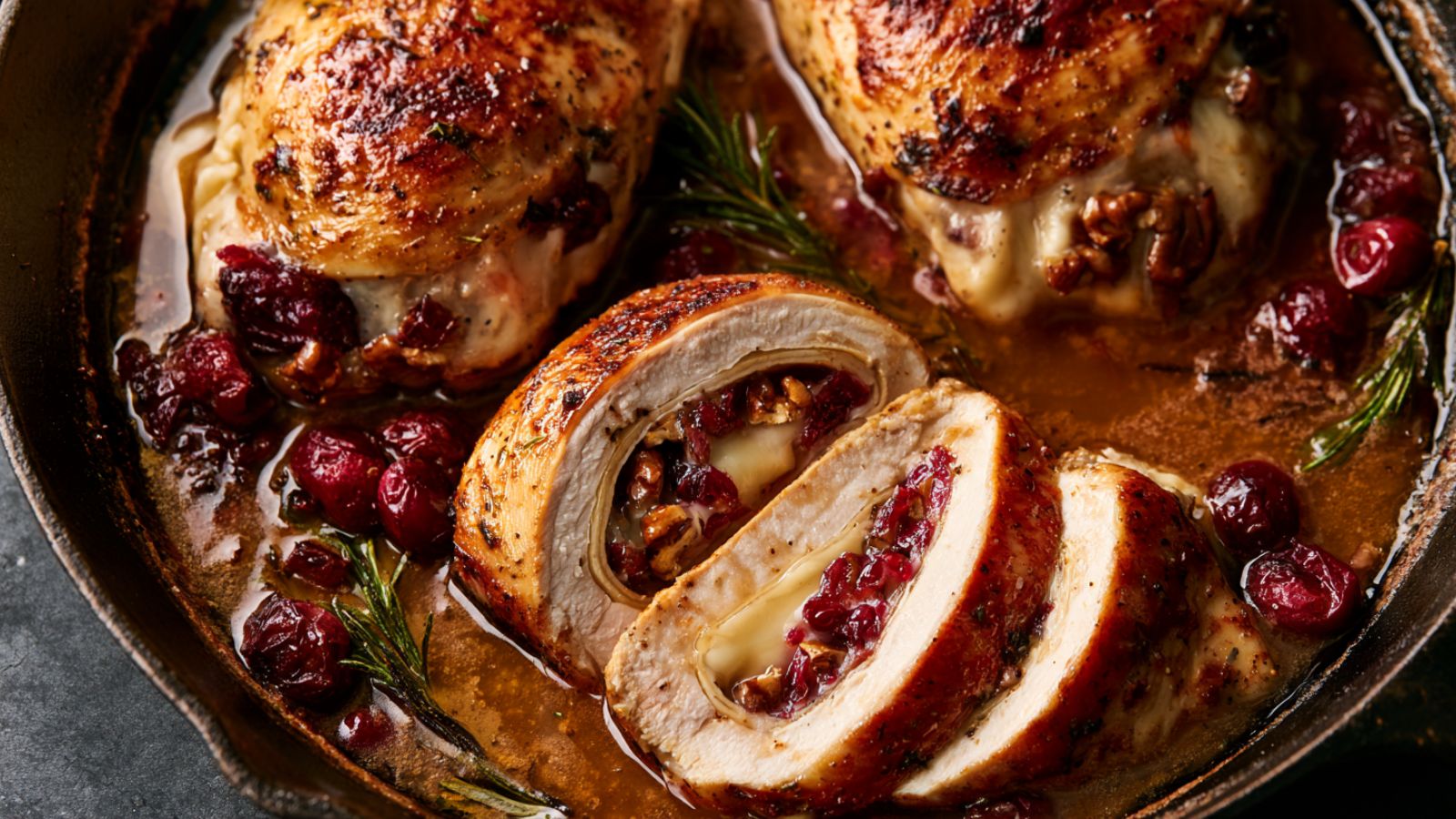
Today we are making Skillet Cranberry Brie Stuffed Chicken Breasts that actually work. We are talking thick, juicy chicken breasts with a mahogany pan-seared crust, packed with creamy molten Brie, tart whole cranberries, toasted buttery pecans, and aromatic fresh rosemary. Slice into this on a random Tuesday date night or serve it for Thanksgiving dinner, and everyone at your table will think you went to culinary school.
The Food Science of Cheese Retention (Why Brie Leaks)
To keep cheese inside a chicken breast, you have to understand the thermal properties of dairy fat.
Brie is a soft-ripened cheese with a melting point of around 90 to 100 degrees Fahrenheit. Chicken breast meat, on the other hand, is dense, lean muscle that must hit an internal temperature of 165 degrees Fahrenheit to be safely cooked and juicy.
If you put warm, room-temperature Brie inside raw chicken and bake it slowly in an oven:
- The Melting Gap: The cheese liquifies when the chicken is only at 110 degrees.
- Expansion Pressure: As the chicken meat heats up, the muscle fibers contract and squeeze the pocket like a fist.
- The Eruption: That pressure forces the liquified cheese straight out of the open seam and onto the scorching pan.
We fix this with two brilliant culinary moves:
- Keep the Rind On: Never trim the white rind off your Brie wedges! That edible rind is made of living cultures that form a firm, structural bloomy mold. In the heat of the oven, the rind acts like a microscopic retaining wall. It softens slightly but holds its shape, keeping the molten interior from leaking out.
- The Freezer Chill: Slice your Brie into thick wedges and slide them into the freezer for ten minutes while you prep the chicken and cranberry filling. Starting with ice-cold cheese delays the melting process. The cheese reaches peak gooey richness at the exact second the chicken hits 165 degrees.
The Four Non-Negotiable Secrets to Flawless Stuffed Chicken
If you want restaurant-grade stuffed chicken without cheese blowouts, follow these four rules to the letter.
1. Cut a 3/4 Horizontal Pocket. Place your palm flat on top of the chicken breast to stabilize it. Take a sharp, thin paring or boning knife and slide it into the thickest side of the breast. Cut horizontally through the center, sweeping the blade toward the back and edges without piercing through the other three sides. You want a deep envelope with a solid hinge, not a gaping hole.
2. The Toothpick Cross-Stitch. Do not just poke toothpicks straight into the meat like birthday candles. You need to use them like sewing needles. Insert the toothpick through the top flap of meat, gather the bottom meat flap, and push it back up through the top. Weave two to three toothpicks across the seam horizontally. This seals the pocket shut under mechanical tension.
3. The Sear-and-Bake Method. Never put raw stuffed chicken directly into a cold baking dish. We start the chicken in a smoking-hot cast iron skillet with olive oil and butter for three minutes. That rapid stovetop heat sears the outer meat fibers shut, building a deep golden crust and trapping internal juices before the pan even hits the oven.
4. Probe the Meat, Not the Cheese. When testing for doneness with your digital instant-read thermometer, aim the probe into the thickest meat of the chicken breast, entering from the top or side. If your thermometer probe slips into the molten pocket of Brie, you will get a false reading of 190 degrees while the surrounding chicken is still pink and raw.
Substitutions and Flavor Upgrades
This flavor combination is a modern holiday classic, but you can tweak the ingredients based on your personal taste or seasonal pantry.
Cheese Alternatives: If you do not have Brie, Camembert is the closest direct substitute and brings a slightly funkier, earthier profile. Sharp white cheddar or fontina also melt beautifully, though you should slice them thick. Avoid fresh wet mozzarella, as it releases too much water inside the pocket and steams the chicken.
The Nut Factor: Chopped toasted pecans bring an essential buttery crunch that balances the velvety cheese and soft cranberries. Toasted walnuts or sliced almonds work just as well. If someone at your table has a tree nut allergy, swap the pecans for roasted pumpkin seeds (pepitas) or toasted sunflower seeds for that same crunchy contrast.
Cranberry Options: Whole berry cranberry sauce gives you the perfect balance of sweet and tart. If you have leftover homemade cranberry relish from the holidays, use it! If you are using canned sauce, make sure to buy whole berry rather than jellied cranberry log, which dissolves into liquid in the oven.
The Air Fryer Method: You can make this in an air fryer with outstanding results. Preheat your air fryer to 360 degrees Fahrenheit. Spray the basket with avocado oil spray. Place the stuffed, toothpick-pinned chicken breasts in the basket in a single layer. Air fry for 14 to 16 minutes, flipping gently halfway through, until the center meat reads 165 degrees.
Bennett’s Troubleshooting Guide
Did something look strange while you were cooking? Here is how to diagnose and fix it in real time.
Why did a little cheese still leak into the skillet? A tiny smear of melted cheese on the pan is totally normal and actually a blessing. Do not throw it away! When you deglaze the skillet with chicken broth and butter at the end, that caramelized cheese melts straight into the liquid, turning your pan sauce into liquid gold.
Why is my chicken breast cooking unevenly? Chicken breasts are naturally wedge-shaped: thick at the top and skinny at the tip. When you cut your pocket, focus the pocket in the thickest half of the breast. Tuck the thin tail end of the breast slightly underneath itself before searing so the entire breast sits at an even thickness in the pan.
Can I prep these in advance for a dinner party? Absolutely. You can slice, stuff, and toothpick-pin the chicken breasts up to eight hours in advance. Place them on a plate, cover tightly with plastic wrap, and keep them refrigerated. Pull them out of the fridge 15 minutes before cooking so the cast iron does not lose heat, sear on the stove, and bake.
Storage and Next-Day Reheating
Stuffed chicken breasts make a ridiculously satisfying lunch the next day, provided you do not nuke them into dry rubber.
Refrigerator Storage: Place leftover chicken breasts in an airtight container in the fridge for up to three days.
Avoid the Microwave Trap: High-power microwaving will cause the Brie to liquify completely and run out of the chicken, while turning the breast meat rubbery and dry.
The Skillet Reheat Hack: To reheat while keeping the chicken juicy and the cheese intact, place the cold breast in a non-stick skillet with one tablespoon of chicken broth or water over medium-low heat. Cover with a tight lid for 6 to 8 minutes. The steam gently warms the meat through without boiling the cheese, keeping the chicken tender and succulent.