
I tested this pasta bake three times in a single weekend. My kitchen looked like an Italian trattoria exploded in it. Every burner on my stove was covered in cream splatters, empty pasta boxes cluttered my recycling bin, and my sink had a towering pile of cheese graters. I was determined to fix what is hands down the most heartbreaking dinner tragedy on the internet: dry, separated, greasy baked Alfredo.
Let me be completely candid with you. Most chicken Alfredo pasta bakes you find online are absolute garbage. They tell you to boil pasta until soft, dump a jar of paste-like supermarket Alfredo over raw chicken, bury it under cheap cheese, and bake it for 40 minutes.
What comes out of the oven? A greasy disaster zone. The heavy cream splits into an oily yellow puddle, the parmesan turns into gritty sand, the chicken dries out into pencil erasers, and the pasta absorbs all the remaining liquid until it turns into baby food mush.
We are not doing that today.
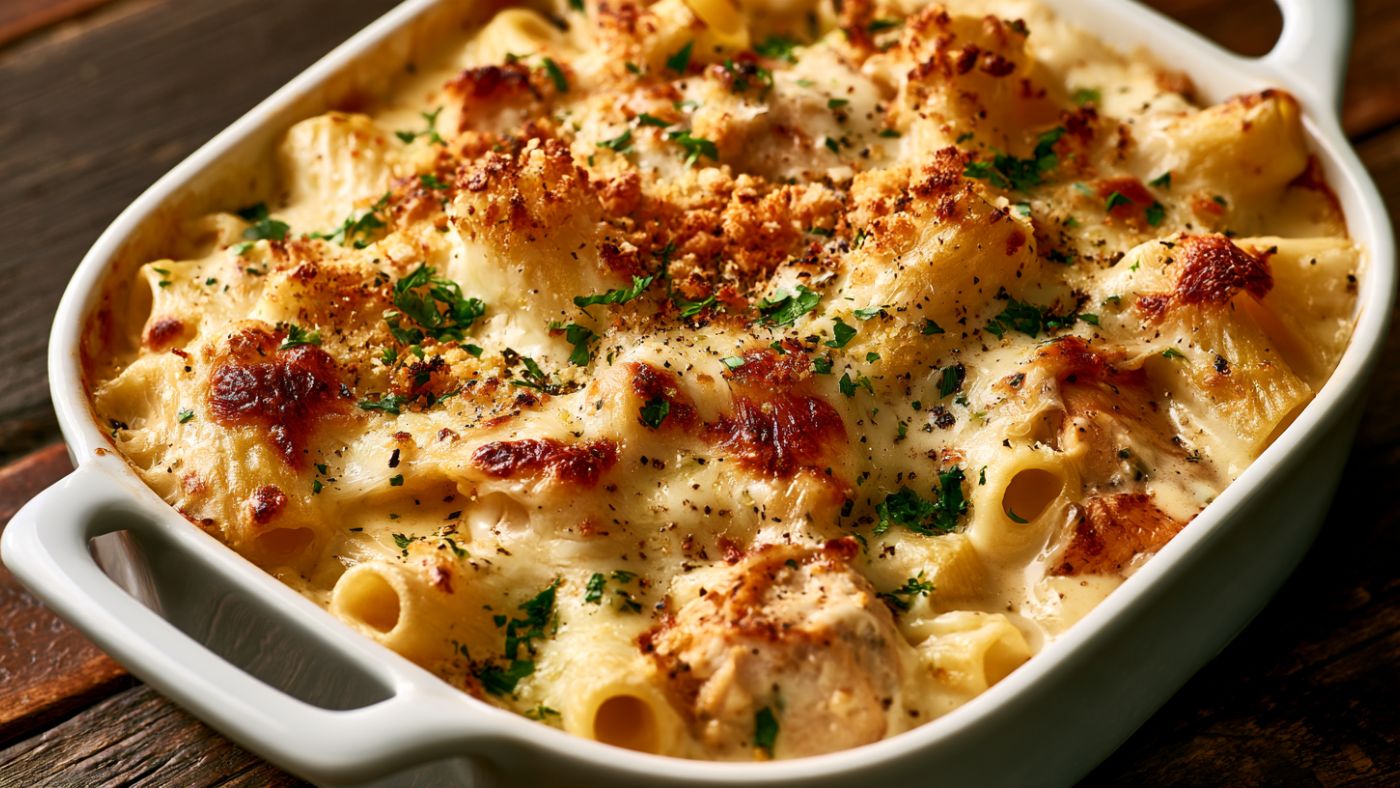
Today we are building an insanely luxurious Garlic Butter Chicken Alfredo Pasta Bake that stays velvety smooth from the first bite to the last reheated lunch. We are talking tender, juicy chicken seared with garlic butter, tubes of rigatoni flooded with homemade parmesan cream sauce, and a blistered lid of molten mozzarella and crispy panko breadcrumbs.
Why Baked Alfredo Usually Splits (And The Food Science Fix)
Traditional stovetop Alfredo is a delicate emulsion of dairy fat, water, and proteins. When you toss freshly grated parmesan into warm butter and cream, those components cling together in harmony.
The minute you slide an Alfredo dish into a 375-degree oven, all that harmony collapses. Intense oven heat causes the milk fats to separate from the water. Before you know it, your creamy sauce breaks into a slick of yellow butter grease floating over chalky cheese curds.
My recipe solves this kitchen nightmare with two non-negotiable food science tricks:
- The Cream Cheese Stabilizer: We whisk just two ounces of softened cream cheese directly into the warm heavy cream before adding the parmesan. Real cream cheese contains natural emulsifiers and milk proteins that act as a microscopic safety net. It locks the fat and liquid together, making the sauce virtually bulletproof against oven heat. It will not split, curdle, or break.
- Starchy Pasta Water Magic: Never drain your pasta water down the sink! That cloudy cooking water is liquid gold packed with gelatinized starches. Stirring a splash into the Alfredo sauce creates a glossy bridge between the dairy fat and the pasta noodles, helping the sauce coat every square millimeter of rigatoni.
The Four Non-Negotiable Secrets to Pasta Bake Perfection
If you want restaurant-grade results, you cannot cut corners on these four rules. I made every mistake in the book so you do not have to.
1. Severely Undercook the Pasta. Look at the back of your pasta box for the al dente cooking time. Now subtract two full minutes from that number. If the box says nine minutes, pull the pasta at seven minutes. The pasta must be intensely firm to the bite when you drain it. Remember, it is going to sit submerged in boiling hot Alfredo sauce inside a hot oven for another 20 minutes. If your pasta is already soft when it enters the baking dish, it will turn into mushy paste.
2. Buy a Block of Parmigiano-Reggiano. Do not buy the pre-shredded cheese in plastic tubs, and definitely stay away from the green shaker can. Commercial pre-grated cheeses are coated in cellulose powder, an anti-caking wood pulp derivative that prevents the cheese from melting cleanly. That chemical coating is the primary reason your sauce turns gritty. Buy a wedge of real Parmigiano-Reggiano or Grana Padano and grate it on a microplane. It melts into silky liquid velvet.
3. Sear the Chicken First in Garlic Butter. Never toss raw or boiled chicken into a pasta bake. We slice the chicken thin, season it aggressively with garlic powder and Italian herbs, and sear it in screaming-hot butter and olive oil until browned. Those browned bits stuck to the bottom of the pan are called fond. When we drop minced garlic and cream into that exact same skillet, all that savory roasted flavor dissolves straight into the Alfredo sauce.
4. The Panko Broiler Blast. A great pasta bake is all about textural contrast. You have rich, velvety cream sauce and chewy pasta on the bottom. To balance that richness, we top the mozzarella with a dusting of panko breadcrumbs and hit it with the oven broiler for the final two minutes. The cheese blisters with golden brown spots while the panko crumbs turn shatteringly crisp.
Substitutions and Dietary Swaps
This recipe is rock-solid, but you can easily modify it based on your personal diet or what is hanging out in your crisper drawer.
Chicken Choices: Boneless, skinless chicken breasts work great when sliced thin and seared quickly. If you prefer richer dark meat, boneless skinless chicken thighs are even more forgiving and stay outrageously juicy in the oven. In a rush on a busy weeknight? Shred up a warm store-bought rotisserie chicken and fold it directly into the sauce.
Sneak in Some Greens: If you want to turn this into a complete one-dish meal, fold in three cups of fresh baby spinach right before pouring the sauce into the baking dish. The residual heat will wilt the spinach in seconds without watering down the sauce. Steamed broccoli florets or sautéed cremini mushrooms also taste incredible drenched in garlic Alfredo.
Pasta Shapes: Rigatoni is the undisputed king here because the wide hollow tubes fill up with creamy sauce like little flavor cannons. Penne rigate, cavatappi, and large shells are fantastic runners-up. Avoid long flat noodles like fettuccine or linguine for baked pasta dishes, as they clump together and bake unevenly in a casserole dish.
Gluten-Free Options: You can easily make this gluten-free by swapping the pasta and breadcrumbs. Use a sturdy corn-and-rice blend pasta (like Rummo or Barilla Gluten-Free) and cook it three minutes shy of al dente, as gluten-free pasta breaks down faster in the oven. Top with gluten-free panko crumbs for that signature crunch.
Bennett’s Troubleshooting Guide
Did something look strange while you were cooking? Here is how to diagnose and fix it immediately.
Why is my sauce too thick before baking? Alfredo sauce thickens rapidly as it cools down on the stove. If your sauce looks like glue before it even hits the oven, splash in an extra two to three tablespoons of your reserved hot pasta water or heavy cream. The sauce should pour like thick warm chowder, easily coating the back of a wooden spoon.
Why did my baked pasta turn dry? If your finished bake looks dry instead of creamy, one of two things happened: you either cooked the pasta too long in the boiling water, or you baked the dish uncovered for too long. Overcooked pasta acts like a dry sponge, sucking every drop of liquid out of the sauce. Stick to the 20-minute bake time and pull it the moment the edges bubble.
Can I make this ahead of time? Yes, this is an elite meal prep dinner. Assemble the entire dish through the cheese topping stage in your baking dish, let it cool completely on the counter, and cover tightly with aluminum foil. Refrigerate for up to 48 hours. When you are ready to eat, bake covered with foil at 375 degrees Fahrenheit for 25 minutes, remove the foil, and bake uncovered for an additional ten minutes until hot and bubbly.
Storage and Next-Day Reheating
Reheating leftover Alfredo is where most people ruin their dinner. Microwave microwaves blast the pasta with uneven heat, causing the butter fat to instantly separate into an oily puddle.
Refrigerator Storage: Transfer leftovers into an airtight container and store in the fridge for up to four days. As it chills, the sauce will firm up into a solid block because of the butter and cheese. Do not panic, this is completely normal.
The Stovetop Reheat (Best Method): Drop your leftover portion into a small non-stick skillet over medium-low heat. Add two tablespoons of whole milk or water to the pan and cover with a lid for three minutes to let the steam loosen the pasta. Remove the lid and gently stir until the sauce emulsifies back into glossy silk.
The Gentle Microwave Hack: If you are at work and only have a microwave, splash one tablespoon of milk or water over your bowl of pasta. Cover the bowl with a damp paper towel and reheat at 50 percent power in 60-second intervals, stirring gently between each zap. The lower power level warms the fats gently without breaking the emulsion.