
I tested this recipe four times in three days. My stovetop looked like a battlefield of sesame oil splatters and shredded cabbage confetti. Every dish towel I owned smelled like toasted garlic and Shaoxing wine. I was on a personal crusade to rescue one of the most disrespected dishes in the entire American-Chinese takeout canon.
Let me be brutally honest with you. Most takeout joints treat Moo Shu Pork like an afterthought. They take gray, boiled pork strips, toss them into a pan with soggy, watery cabbage that was shredded three days ago, drown the whole mess in cheap sugar syrup, and roll it in a cold, rubbery pancake. It is greasy, limp, and depressing.
We are not doing that today.
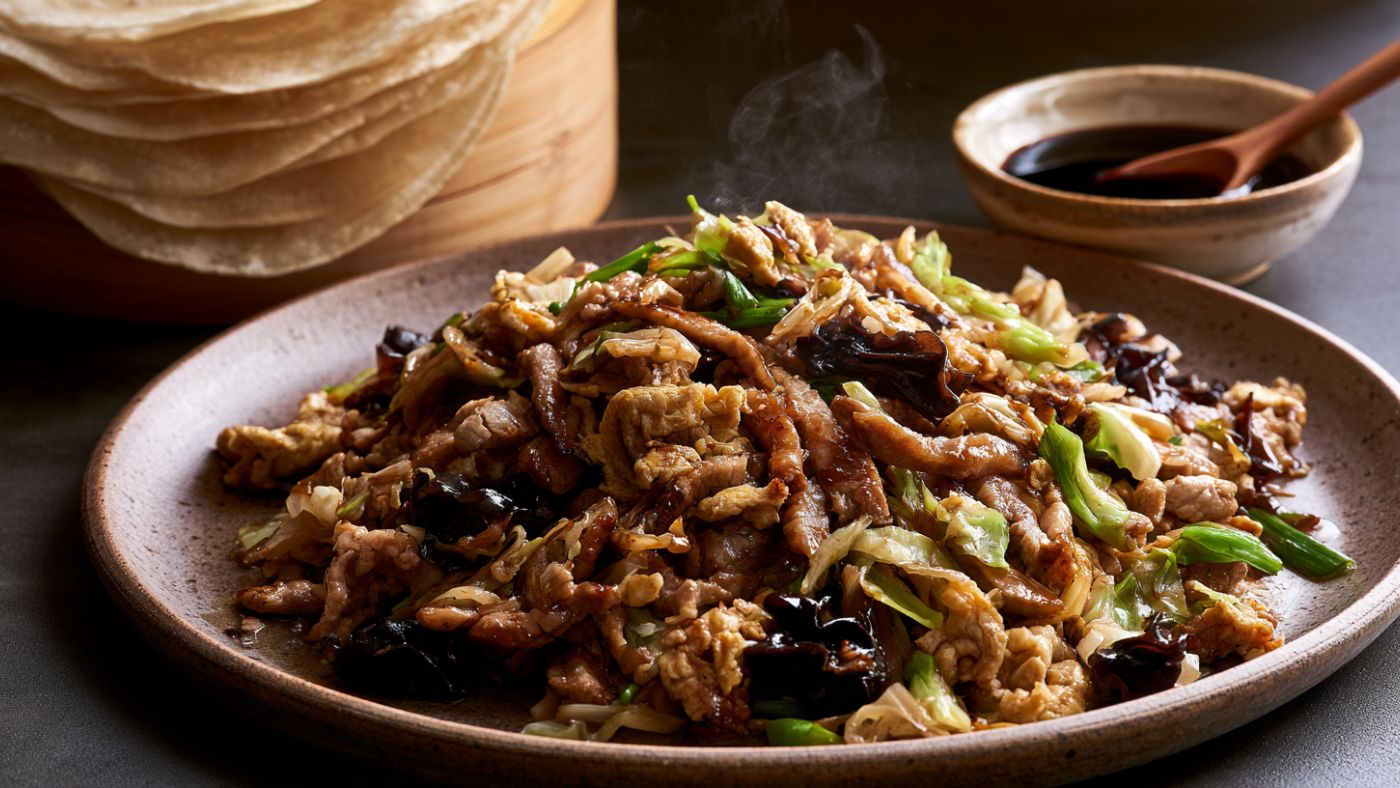
Real Moo Shu Pork is an absolute masterclass in texture and high-heat stir-fry technique. We are talking juicy, velveted pork tenderloin that melts in your mouth, fluffy clouds of golden scrambled egg, wood ear mushrooms that snap between your teeth, and shredded cabbage that stays blisteringly crisp. Smear a warm pancake with sweet, savory hoisin sauce, pile in the filling, roll it up like a tiny burrito, and prepare to have your mind blown.
The Science of Velveting (The Chinese Restaurant Secret)
Ever wonder why the pork at top-tier Chinese restaurants is impossibly tender and juicy, while home-cooked pork often turns dry and rubbery?
The secret is a traditional technique called velveting.
Pork tenderloin is an extremely lean cut of meat with very little intramuscular fat. When lean meat hits a screaming-hot wok, the muscle fibers violently contract and squeeze their natural juices out into the pan. Before you know it, your pork is boiling in its own water, leaving you with dry, stringy cardboard.
To velvet our pork, we toss the thin strips in a mixture of soy sauce, Shaoxing wine, sesame oil, and cornstarch:
- The Starch Shield: The cornstarch dissolves in the liquid marinade and coats every strip of meat in a microscopic film.
- Moisture Lock: When that starch hits hot oil, it instantly gelatinizes, forming a delicate protective shield around the meat.
- Juice Retention: The meat cooks inside that protective casing without losing a single drop of its internal moisture. The texture becomes slippery, velvety, and shockingly tender.
The Four Non-Negotiable Rules of High-Heat Stir-Frying
Stir-frying takes less than ten minutes from start to finish. Once the burner is on, you will not have time to chop a scallion or search your pantry for soy sauce. Follow these four rules and you will nail it every single time.
1. Mise en Place Is Life or Death. Have every single ingredient measured, chopped, and lined up next to your stove before you even think about turning on the flame. The sauce must already be whisked in a measuring cup. The cabbage must be shredded. The eggs must be beaten. If you stop halfway through a high-heat stir-fry to hunt for ginger, your garlic will burn and your wok will turn to bitter charcoal.
2. Cook in Stages. Do not try to be a hero and cook everything in one giant pile. If you dump raw eggs, cold pork, and wet cabbage into the wok all at once, your pan temperature will crash instantly. Instead of stir-frying, your food will steam in an unappetizing gray puddle. We scramble the eggs, pull them out. We sear the pork, pull it out. We blast the vegetables, then combine everything in the final 60 seconds.
3. Dry Your Vegetables Completely. Water is the ultimate enemy of wok cooking. If your rehydrated wood ear mushrooms or shredded cabbage are soaking wet, that surface moisture turns directly into steam the second it hits hot oil. Shake your mushrooms dry in a colander and pat your cabbage dry with a clean kitchen towel before tossing them into the wok.
4. Wood Ear Mushrooms Are Mandatory. Wood ear mushrooms (also known as black fungus) do not bring a heavy mushroom flavor to the table. What they bring is texture: an electric, crunchy, gelatinous snap that cannot be replicated by button mushrooms or creminis. You can grab a bag of dried wood ears at any Asian market or order them online for five bucks. They rehydrate in warm water in 15 minutes and last in your pantry for two years.
The Pancake Dilemma: Mandarin Pancakes vs. The Tortilla Hack
Traditionally, Moo Shu is served wrapped in Mandarin pancakes (Chun Bing), which are paper-thin unleavened flatbreads made from flour and boiling water, rolled out in pairs with a drop of sesame oil between them.
If you want to make authentic Mandarin pancakes from scratch, go for it. They are fantastic. You can also find frozen Mandarin pancakes in the freezer section of most Asian grocery stores. Simply steam them in a bamboo steamer or damp paper towel for two minutes until pliable.
The Weeknight Tortilla Hack: If it is 6:30 PM on a Tuesday and you do not have Mandarin pancakes, do not panic. Grab a pack of small, super-thin street-taco flour tortillas. Brush each tortilla with a tiny drop of toasted sesame oil, stack them up, wrap them in a damp paper towel, and microwave them for 30 seconds. The steam softens the tortillas into pliable, warm wrappers that carry the filling like a champ.
Substitutions and Dietary Swaps
This recipe is incredibly flexible and easily adapted for different dietary needs without sacrificing that signature restaurant flavor.
Protein Swaps: If you do not eat pork, thinly sliced boneless skinless chicken breast or chicken thighs work identically. Velvet the chicken with the exact same cornstarch marinade. Flank steak or peeled shrimp are also incredible in this sauce. For a vegetarian version, swap the pork for pressed extra-firm tofu strips or shredded king oyster mushrooms.
Gluten-Free Version: To make this completely gluten-free, replace the regular soy sauces with gluten-free tamari or coconut aminos. Swap the oyster sauce for a certified gluten-free oyster sauce (like Lee Kum Kee Panda Brand Gluten-Free), and double-check that your hoisin sauce is gluten-free. Serve the filling wrapped in warm corn tortillas or butter lettuce cups for a fresh, low-carb crunch.
Vegetable Shortcuts: If shredding a whole head of cabbage sounds like too much work on a weeknight, buy a 14-ounce bag of standard tri-color coleslaw mix (shredded cabbage and carrots). It works like magic, cuts down prep time to five minutes, and brings great color to the platter.
Bennett’s Troubleshooting Guide
Did something look off while you were tossing your wok? Here is how to diagnose and fix it in real time.
Why is there liquid pooling in the bottom of my wok? Liquid pooling means your pan was not hot enough or you overcrowded the skillet. The vegetables released their water instead of searing. If this happens, do not keep stewing it. Quickly use a slotted spoon to pull the meat and vegetables out onto a plate, let the liquid in the wok reduce over high heat for two minutes until it thickens into a glaze, then toss the stir-fry back in for ten seconds.
Why did my scrambled eggs turn brown and rubbery? Eggs cook in 30 seconds flat in a hot wok. If you leave them in the wok while cooking the meat and vegetables, they will turn into overcooked leather. Scramble them softly in clean oil, pull them out immediately while they are still slightly glossy, and only fold them back in during the last 30 seconds of cooking.
Where do I find Shaoxing wine? Shaoxing wine is Chinese fermented rice wine that gives stir-fries their signature savory backbone. You can find it in the Asian aisle of most major supermarkets or at Asian grocers. If you cannot find it, dry cooking sherry or Japanese mirin (cut back on the added sugar if using mirin) makes a great substitute.
Storage and The Next-Day Fried Rice Hack
Moo Shu Pork is best enjoyed steaming hot right out of the wok, but leftovers make the absolute best weekday lunch in your fridge.
Refrigerator Storage: Store leftover filling in an airtight glass container in the fridge for up to three days. Keep your wrappers and hoisin sauce separate so nothing gets soggy.
Reheating: Do not microwave this on high heat or the pork will get chewy. Toss the leftovers into a hot skillet with a tiny teaspoon of oil over medium-high heat for two minutes, tossing constantly until warmed through and crisp.
Bennett’s 5-Minute Fried Rice Hack: If you have leftover Moo Shu Pork and cold jasmine rice in your fridge, you are holding the ingredients for the greatest quick lunch of your life. Heat a skillet screaming hot with a tablespoon of oil. Dump in two cups of cold cooked rice and press it flat to get crispy. Dump your leftover Moo Shu Pork directly over the rice, break up the eggs and pork with your spatula, splash in a dash of soy sauce, and toss violently for three minutes. Pure comfort in a bowl.